LABEL GUIDE · PSG SALMON JOURNAL
How to Read Protein Labels on Salmon and Chicken
Updated 2026-10-08
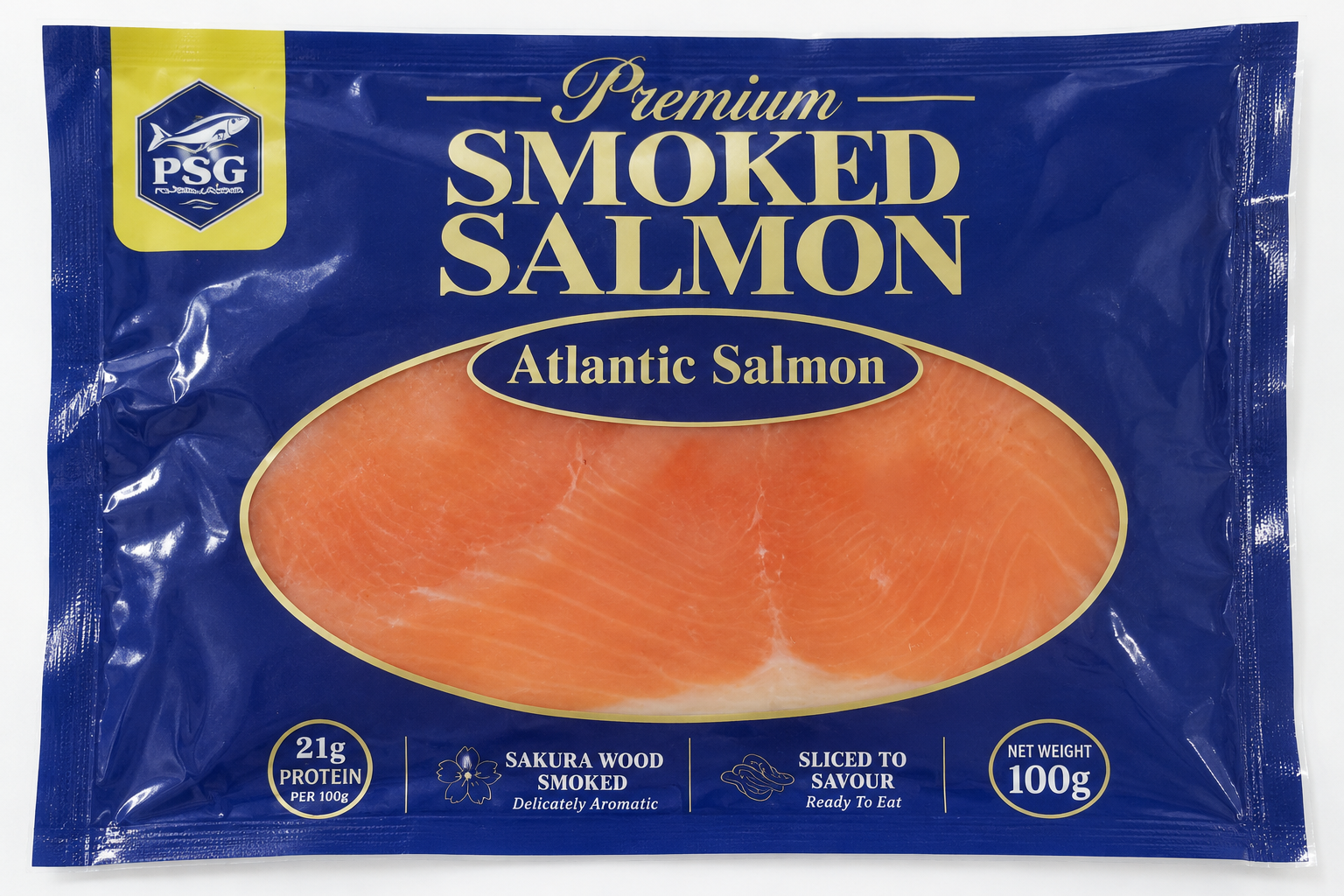
The most useful nutrition comparison is not a generic internet number: it is the current label on the product you are buying. Salmon and chicken products can differ by recipe, processing, portion size and added ingredients, so read labels on a consistent basis.
Start with the serving basis
Check whether a value is displayed per 100 g, per serving or per package. Comparing two packs only makes sense when you use the same basis.
Then note how many servings the pack contains. A single pack may include more than one labelled serving.
Look beyond protein
Protein is one part of the label. For smoked or seasoned products, sodium can be particularly useful to compare. Also read ingredients, allergens and any preparation instructions.
A product with a similar protein figure can be very different in flavouring, serving size or storage requirements.
Use the label together with food safety instructions
The label tells you how the product should be stored, whether it needs cooking and when it should be used. Follow these directions instead of applying a rule from a different food.
For frozen products, plan storage and defrosting before purchase. For ready-to-eat chilled products, make room in the refrigerator and follow the use-by date closely.
Frequently asked questions
Should I compare per serving or per 100 g?+
Either can help, but use the same basis for both products. Per 100 g is a common comparison basis; serving size shows what the manufacturer defines as one portion.
Do all chicken and salmon products have the same nutrition?+
No. Recipe, processing, ingredients, moisture and portion size can all change the label. Compare the current pack.
Sources & further reading
- Hong Kong Centre for Food Safety — Nutrition Labelling FAQ
How to compare nutrition information on a consistent basis.
- Hong Kong Centre for Food Safety — Reducing Dietary Sodium
Reading labels and using lower-sodium flavour choices.